Yetis Additive Engineering helps manufacturers turn additive manufacturing into reliable, economical production – from the first part idea to qualified series.
Get in touchDiscover AM
MYPractical shop-floor experience combined with engineering know-how – for metal and polymer additive manufacturing.
Identifying suitable parts, assessing feasibility and business cases, and developing AM applications with you.
Redesign, part consolidation, lattice structures and topology optimization for lighter, better-performing parts.
Structural simulation and build process simulation to predict distortion and stress before printing.
Development and evaluation of process parameters for new materials, quality and productivity targets.
Capacity planning, build job preparation and workflow design for scaling to series production.
Hands-on training in DfAM, simulation and AM process know-how for engineering teams.
Additive manufacturing (AM), widely known as industrial 3D printing, builds parts layer by layer directly from 3D CAD data (standardized in ISO/ASTM 52900). Instead of removing material, it only adds material where it is needed – enabling geometries that are impossible or uneconomical with conventional methods.
A laser selectively melts fine metal powder, layer by layer (typically 20–100 µm). Produces dense, high-strength parts in steel, aluminium, titanium and nickel alloys.
A laser fuses polymer powder such as PA12 or PA11. No support structures are needed, so parts can be nested densely – ideal for functional series parts.
A thermoplastic filament is extruded through a heated nozzle. Cost-effective for prototypes, fixtures and jigs; also with engineering plastics like PEEK.
Binder jetting, directed energy deposition (DED), stereolithography (SLA) and material jetting complete the seven ISO/ASTM process categories.
Metals: stainless and tool steels (316L, 1.2709), aluminium (AlSi10Mg), titanium (Ti6Al4V), nickel superalloys (Inconel 718/625), cobalt-chrome, copper.
Polymers: polyamides (PA12, PA11), TPU, PP, PEEK and fibre-reinforced compounds.
Aerospace and space, automotive, medical and dental implants, tooling with conformal cooling, energy, industrial machinery, defense and consumer goods.
A typical industrial AM workflow – I support every step.
Identify parts with real AM benefit and a sound business case.
Optimize geometry, orientation and supports for the process.
Validate structure and predict build distortion.
Nesting, parameters and job file creation.
Layer-by-layer manufacturing with process monitoring.
Heat treatment, support removal, machining, inspection.
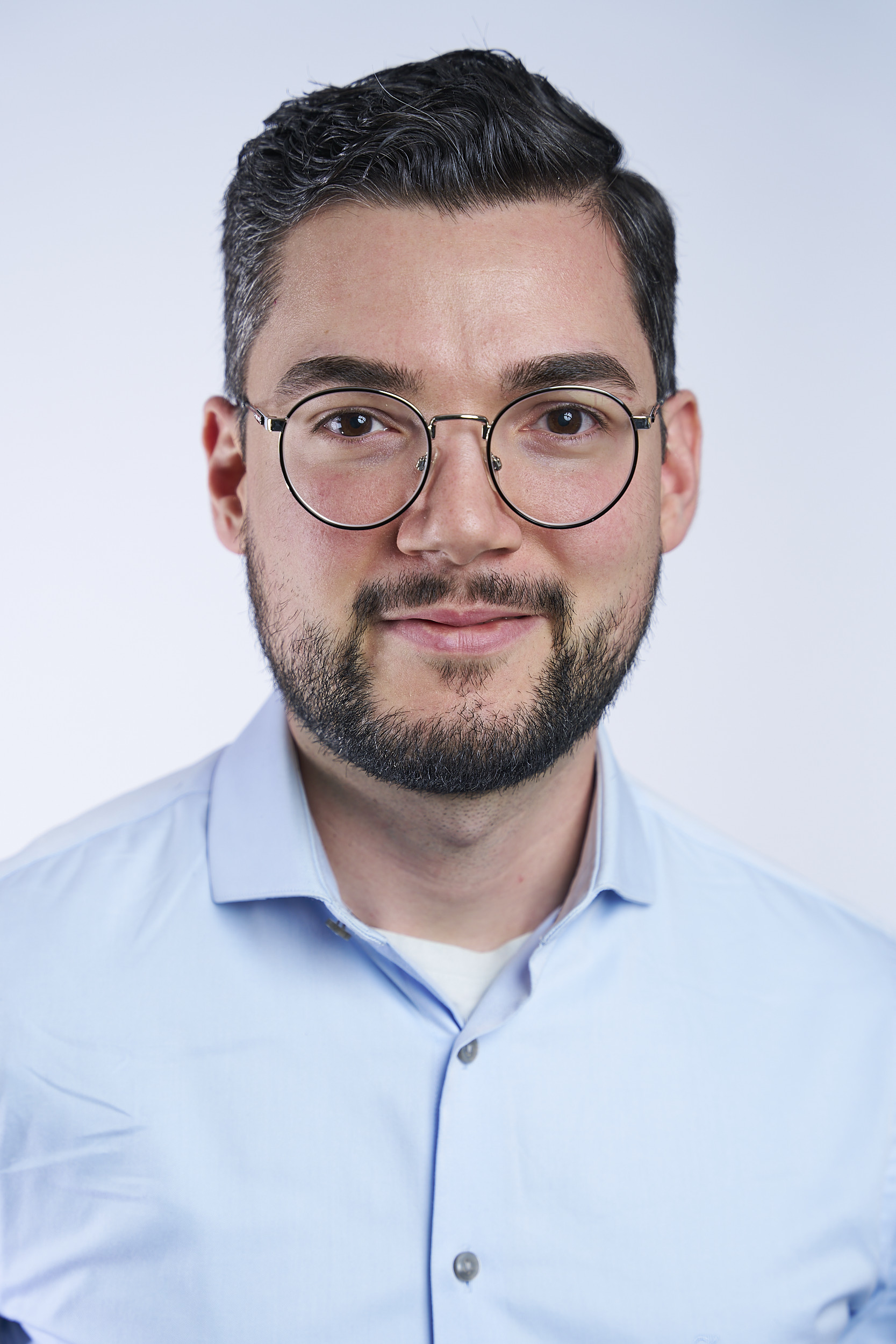
Additive Manufacturing Engineer based in Munich, Germany. Trained precision machinist and certified additive manufacturing specialist (IHK) with a B.Sc. in Mechanical Engineering from Munich University of Applied Sciences.
Years of industrial experience in metal and polymer AM – customer projects in automotive, consumer goods and defense, parameter development, simulation training and production capacity planning. Languages: German, English, Turkish.
Yetis Additive Engineering · Munich, Germany